The U.S. pickleball market has moved past simple logo printing. Buyers now compare paddle programs by material story, on-court feel, visual identity, packaging options, and whether the product looks ready for a serious retail or club launch. This custom pickleball paddle case shows how a private-label program can move from performance materials to signature UV graphics while keeping the finished product practical for overseas buyers.
For this project direction, the goal is not only to make a paddle with a nice surface design. The full case covers the complete product logic: paddle size, weight, core thickness, face material, edge protection, handle treatment, print method, packaging, and sample-to-production workflow. That is the level of detail a foreign trade independent site needs when the visitor may be a brand owner, distributor, club buyer, event organizer, or Amazon/e-commerce seller looking for a reliable custom program.
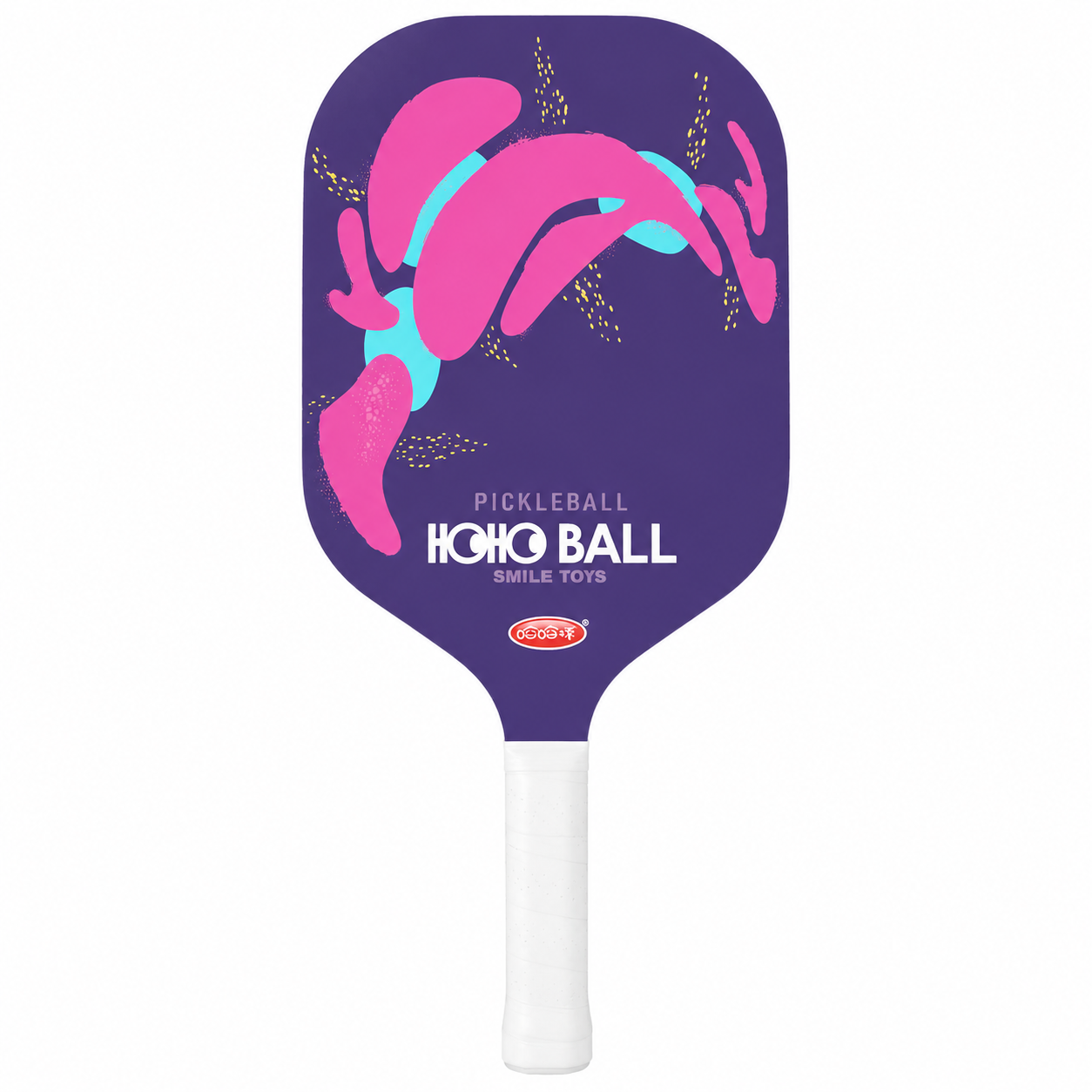
Project Brief: A Custom Paddle Built for Brand Launches
The target product is a custom pickleball paddle for buyers who need a retail-ready or club-ready product rather than a generic factory item. The paddle can be developed for private-label sports brands, pro shops, pickleball clubs, tournament merchandise, corporate gifting, training academies, or promotional campaigns.
The main buyer requirement is clear: the paddle needs to feel credible in hand and look professional in photos, product pages, sample presentations, and final packaging. That means the material choices and the visual design must support the same market position.
Core Product Specifications
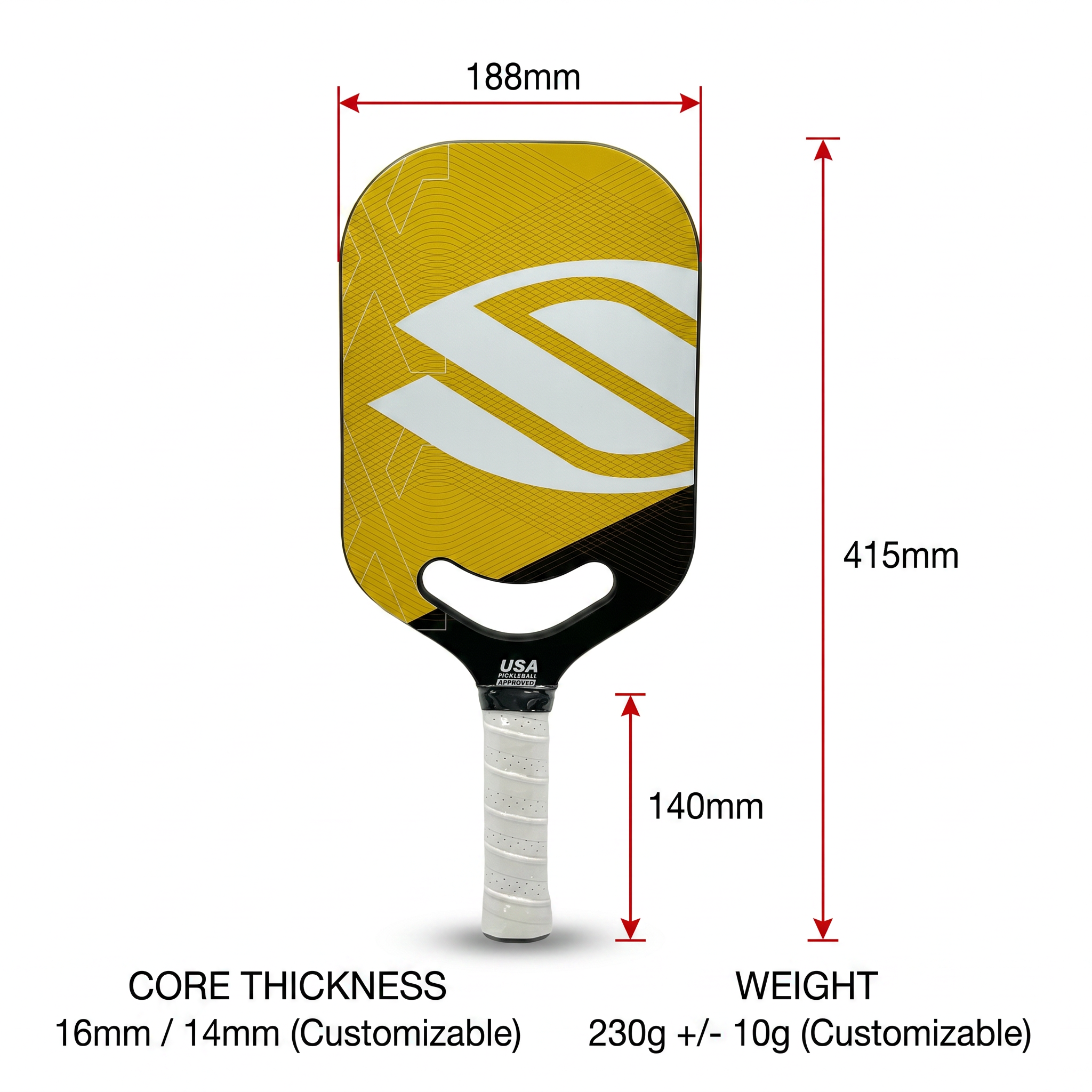
The standard paddle direction uses a practical competition-style shape with an approximate size of 415 mm in length and 188 mm in width. The handle is around 140 mm, giving the paddle a balanced profile for recreational players, club programs, and branded merchandise lines.
Core thickness can usually be developed around 14 mm or 16 mm depending on the required playing feel. A 14 mm paddle can support a more responsive, lively touch, while a 16 mm paddle is often selected for a more stable, controlled feel. Weight can be adjusted around the target range of approximately 230 g, with final tolerance depending on material, surface treatment, handle structure, and packaging requirements.
Material Selection: Matching Performance and Price Position
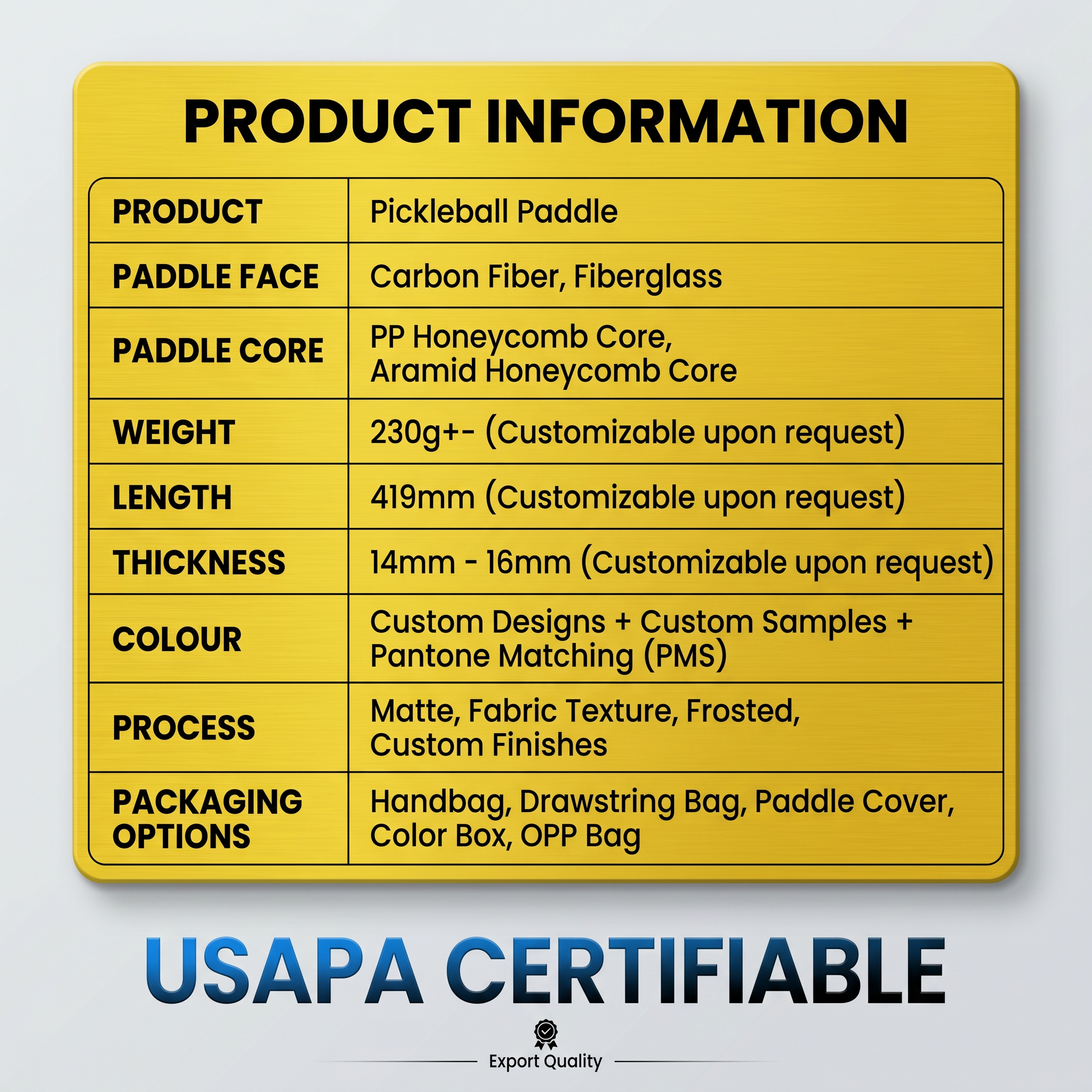
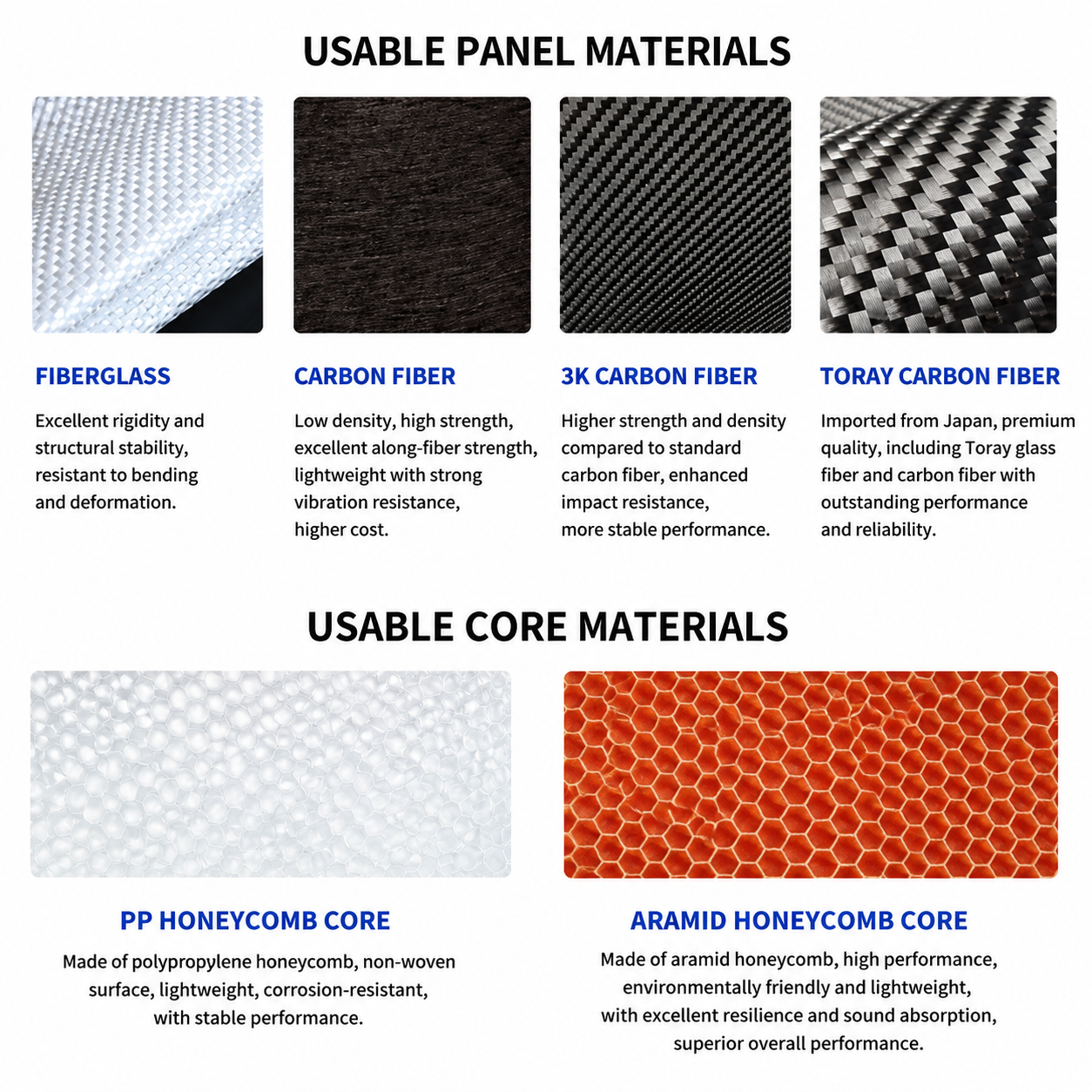
A successful custom pickleball paddle program starts with the correct material match. The paddle face can be developed with carbon fiber or fiberglass, while the inner structure can use a PP honeycomb core or aramid honeycomb core depending on the buyer’s performance target and budget.
Carbon fiber is a strong option for brands that want a premium technical story. It supports a clean product positioning, works well in higher-end listings, and gives the buyer better language for performance marketing. Fiberglass is useful for colorful recreational programs, club merchandise, beginner-friendly paddles, and campaigns where visual impact and cost control matter more than a premium carbon fiber story.
Construction Details: What Buyers Should See Behind the Artwork
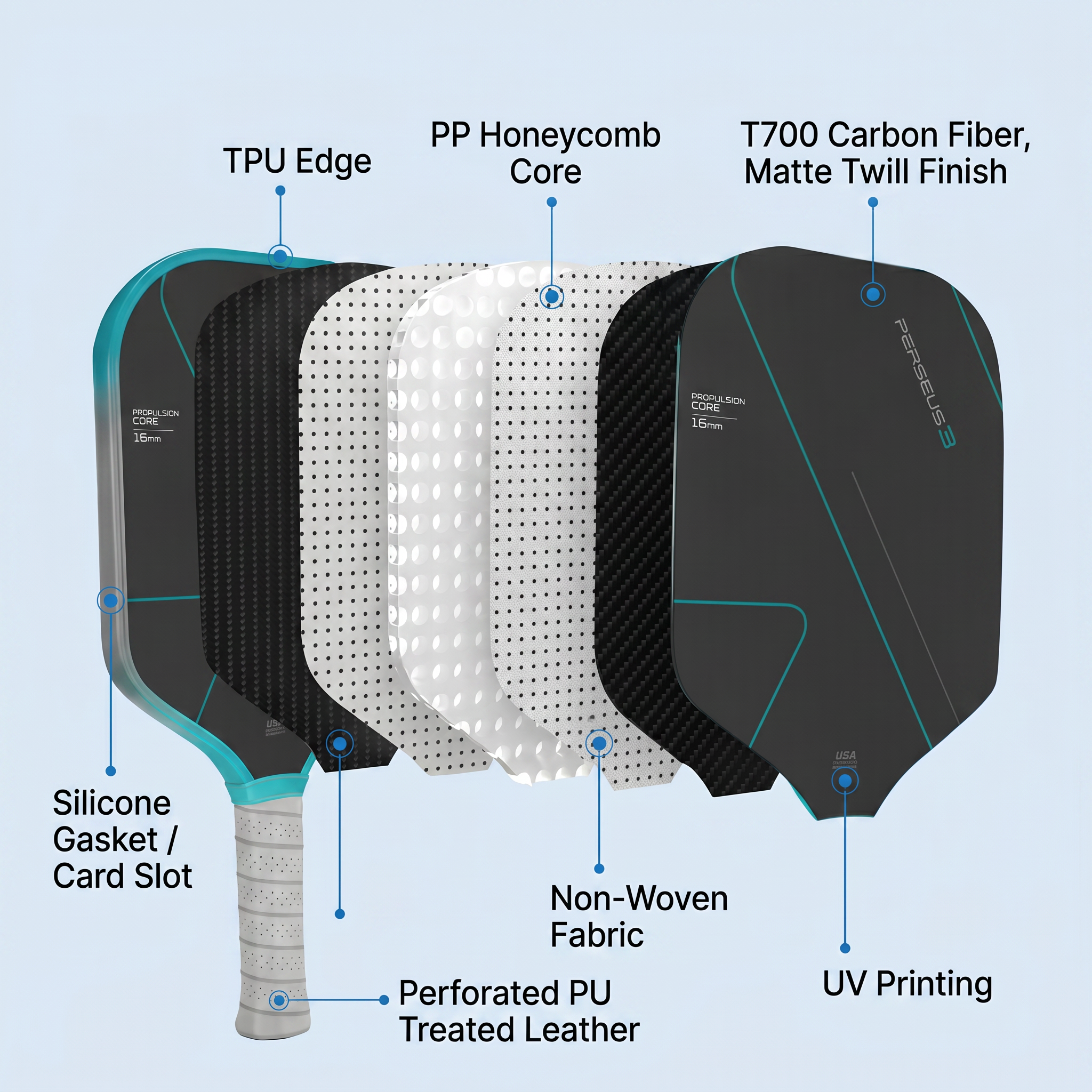
From the outside, a custom paddle may look like a printed surface and a wrapped handle. In production, the result depends on the complete layer structure. A typical build can include a TPU edge, silicone gasket, PP honeycomb core, treated surface layer, carbon fiber or fiberglass face, non-woven fabric support, UV printed graphics, and grip finishing.
This structure matters for foreign trade buyers because it turns a product page from a design showcase into a sourcing decision page. When buyers can see the construction, they can understand why two paddles with similar artwork may perform and price differently.
Performance Upgrade: Carbon Fiber Face and Elasticity
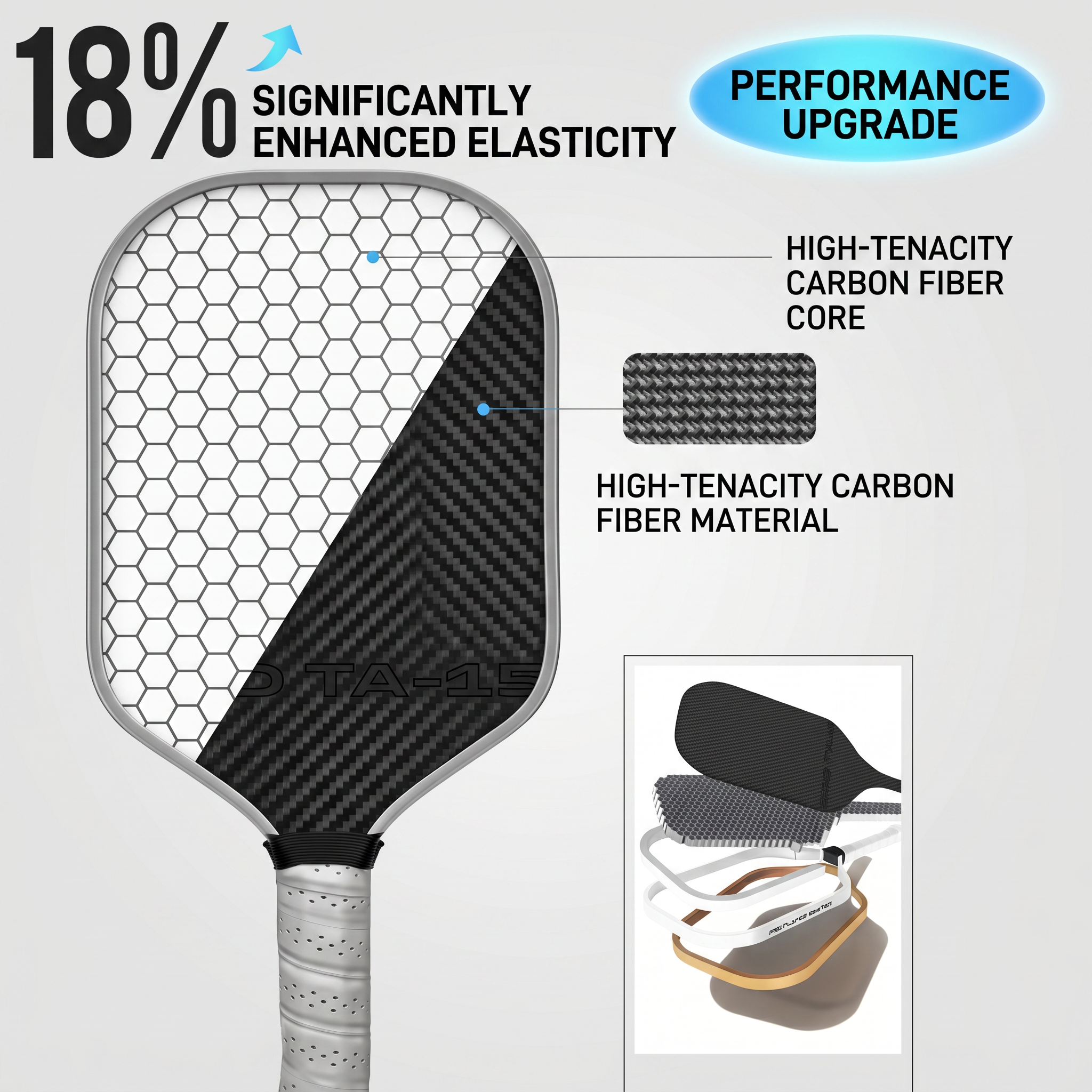
For performance-oriented programs, high-tenacity carbon fiber material can be used to create a stronger selling point. The material direction supports better elasticity, a more premium look, and a clearer performance narrative for online product pages and buyer presentations.
This is especially useful when the customer wants to launch a paddle line that sits above entry-level promotional products. The product can still be customized with original artwork, but the material story gives the buyer more substance to communicate to players and retail customers.
Signature UV Graphics and Brand Customization
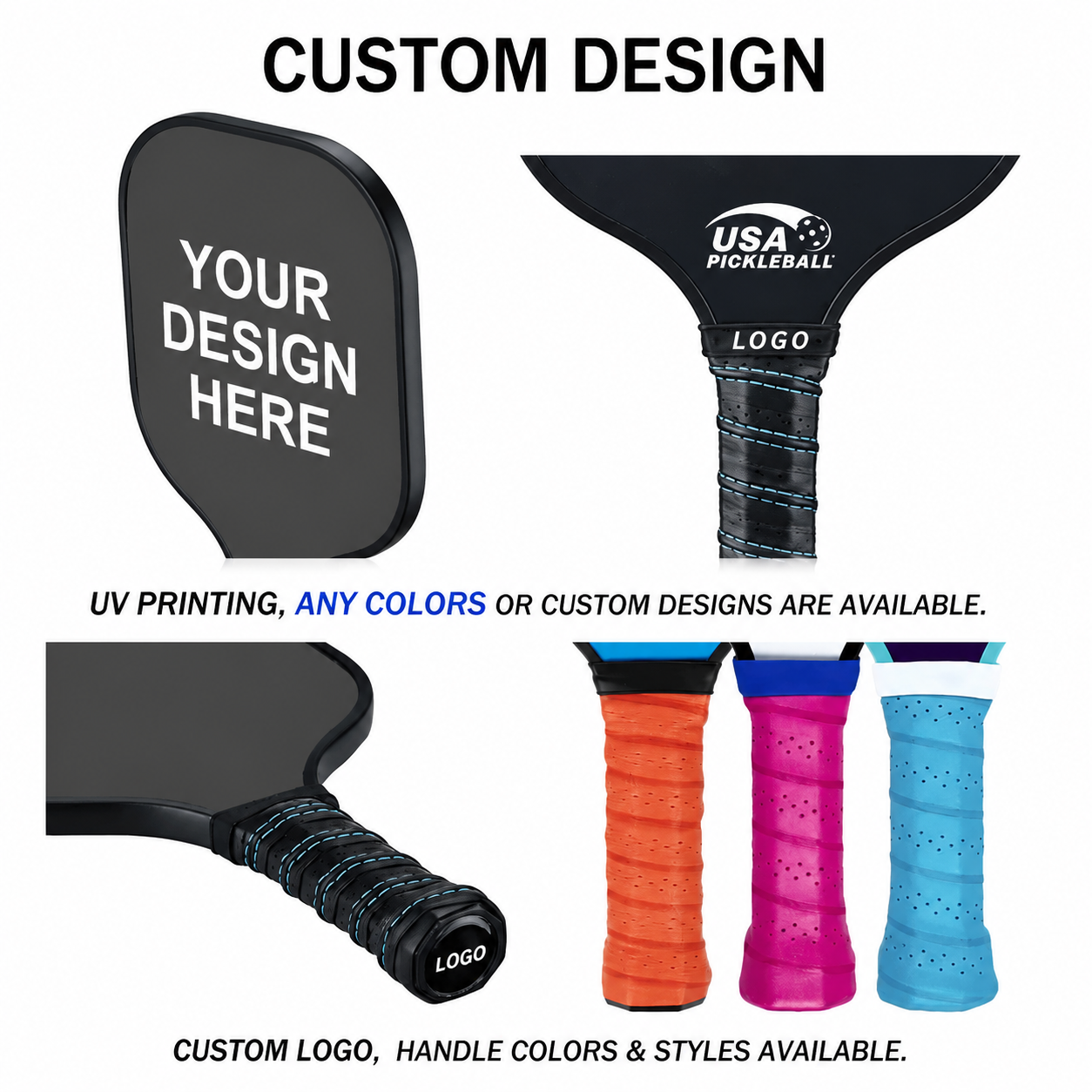
After the material and structure are confirmed, the visual identity is applied through custom UV printing. This process is suitable for logos, full-face graphics, club colors, event artwork, retail collections, promotional patterns, and private-label product lines. Buyers can develop a clean minimalist design, a colorful lifestyle paddle, or a tournament-themed product with clear brand recognition.
Customization does not stop at the paddle face. Handle color, grip style, logo placement, edge appearance, and packaging direction can all support the final product image. For independent-site buyers, these details help the product feel like a complete branded SKU instead of a one-off sample.
Product Presentation for Overseas Sales
In foreign trade, the product has to work before the buyer receives a sample. That means the details shown on the case page should reduce uncertainty: size, thickness, material, core options, print method, packaging options, and application scenarios all need to be visible. A paddle that photographs well and has a clear specification story is easier for buyers to evaluate, quote, and present internally.
Video Review: From Static Detail to Finished Product Feel
The original product video is kept in this case because it adds movement and scale that still images cannot fully show. For overseas buyers, video is useful for checking surface appearance, overall shape, hand feel impression, and product presentation before requesting a sample.
Packaging and Program Options
Packaging can be matched to the buyer’s sales channel. Basic protective packing may be enough for sample development or bulk club orders. Retail-oriented programs can consider paddle covers, drawstring bags, hangbags, color boxes, or other custom packaging options depending on the launch plan and budget.
The product can also be developed toward USAPA-certifiable requirements when the buyer’s market positioning needs that path. Final certification direction should be confirmed according to the buyer’s exact material, surface, thickness, weight, and testing requirements.
Recommended Buyer Applications
- Private-label pickleball paddle brands building a new product line
- Sports distributors sourcing differentiated paddles for the U.S. market
- Pickleball clubs developing branded merchandise for members
- Tournament organizers creating event-specific paddles or commemorative products
- Corporate gifting teams looking for a sports-related custom item
- E-commerce sellers who need stronger product visuals and specification content
Why This Case Works for an Independent Site
A strong independent-site case page should not read like a catalog paragraph. It should show the buyer how the product is planned, what decisions affect quality and price, and why the supplier can support a real custom order. This paddle case does that by combining performance materials, visible construction details, custom UV graphics, finished-product presentation, and practical packaging options.
Custom Options at a Glance
- Paddle face: carbon fiber, fiberglass, 3K carbon fiber, or T700 carbon fiber direction
- Core: PP honeycomb core or aramid honeycomb core depending on performance target
- Thickness: common custom directions include 14 mm and 16 mm
- Weight: adjustable according to material structure and buyer requirements
- Surface: matte, frosted, textured, or custom finish direction
- Printing: custom UV graphics, logo placement, full-face artwork, and brand color matching
- Handle: custom grip color, handle style, logo detail, and comfort direction
- Packaging: handbag, drawstring bag, paddle cover, color box, OPP bag, or retail presentation
MOQ, Sampling, and Production Path
MOQ and lead time depend on the final material, print coverage, packaging style, order volume, and whether the buyer needs sample approval before bulk production. For most custom programs, the practical path is to confirm artwork and specification first, produce a sample or development run, review the finished appearance, and then move into mass production.
If you are sourcing custom pickleball paddles for a U.S. brand, club, distributor, or promotional program, send your artwork direction, target quantity, packaging preference, and expected launch timeline. We can help turn the idea into a sample-ready specification and a finished paddle program built for overseas sales.
发表回复