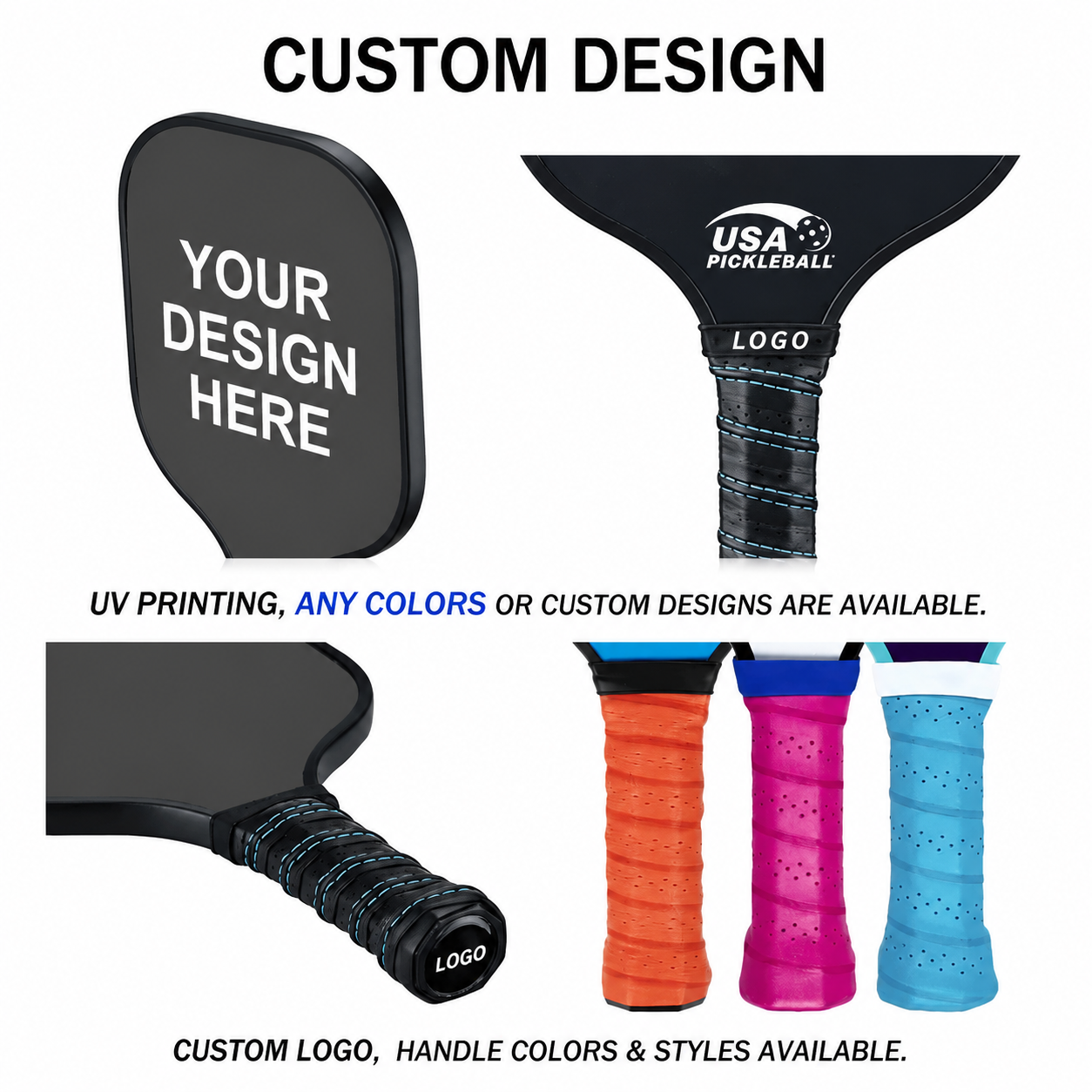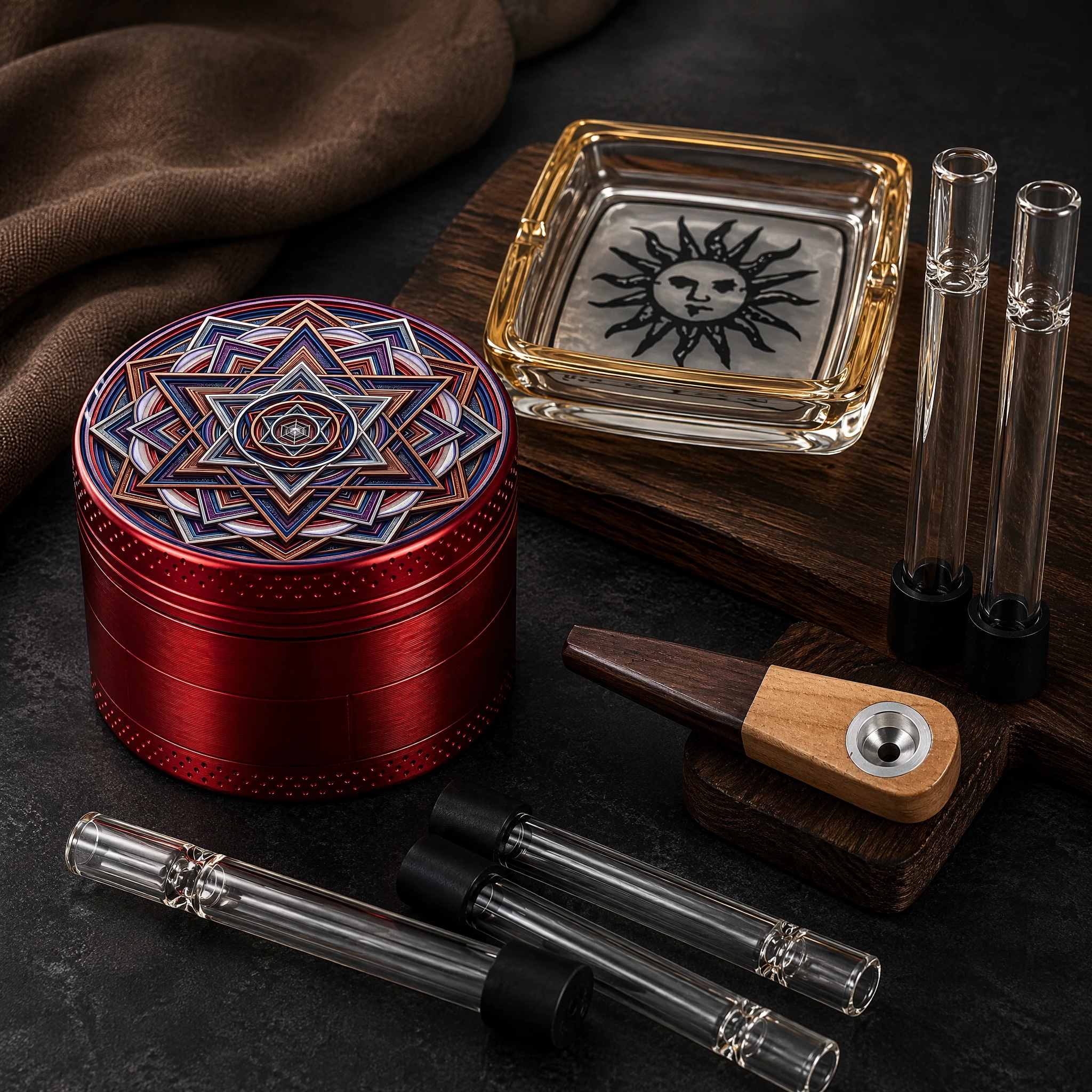
XinnyPrint provides custom UV surface printing for metal, glass, and wood accessory forms. The project focus is accurate artwork placement, durable color output, and repeatable China production support for approved customer designs.
Production note: This page presents surface decoration and manufacturing support for lawful adult customers and approved applications. We do not provide restricted substances, usage instructions, or product-use advice. Product availability, artwork, destination, and shipping feasibility may be reviewed before production.
Project Brief: Custom UV Printing for Metal, Glass, and Wood Accessories
This case covers a mixed-material custom printing program with metal grinder-style accessory forms, clear glass accessory forms, wooden handheld accessory bodies, and glass ashtrays. The goal is to turn a standard product body into a consistent branded item through direct UV printing, controlled positioning, and a clear sample-to-production workflow.
Different materials respond differently to ink, white ink, color density, surface texture, and handling. A reliable project therefore starts with the physical product and the artwork together. Before production, we confirm the printable area, surface finish, artwork scale, orientation, quantity, packaging, and destination requirements.
Metal Accessory Printing: Full-Color Top Covers and Cylindrical Bodies
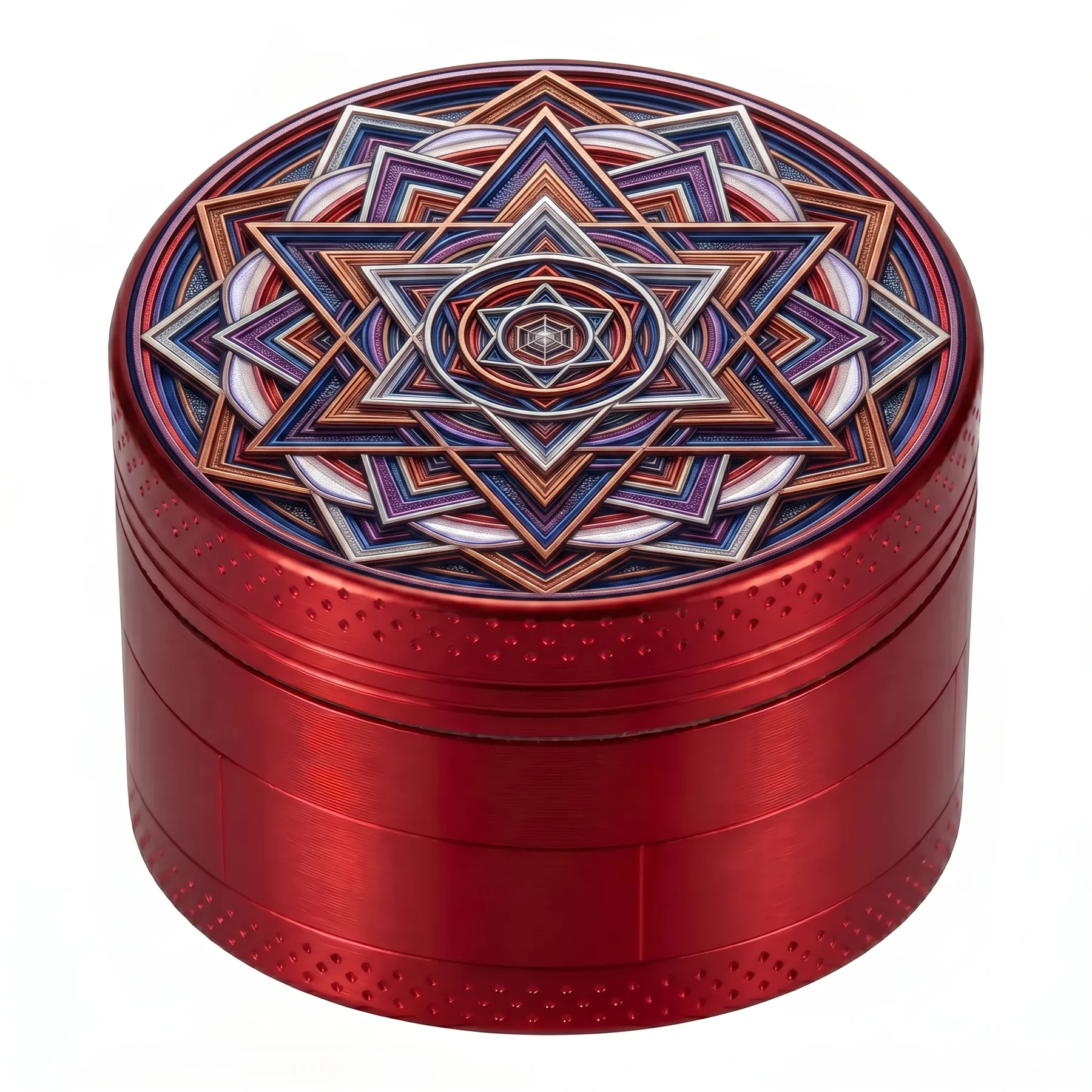
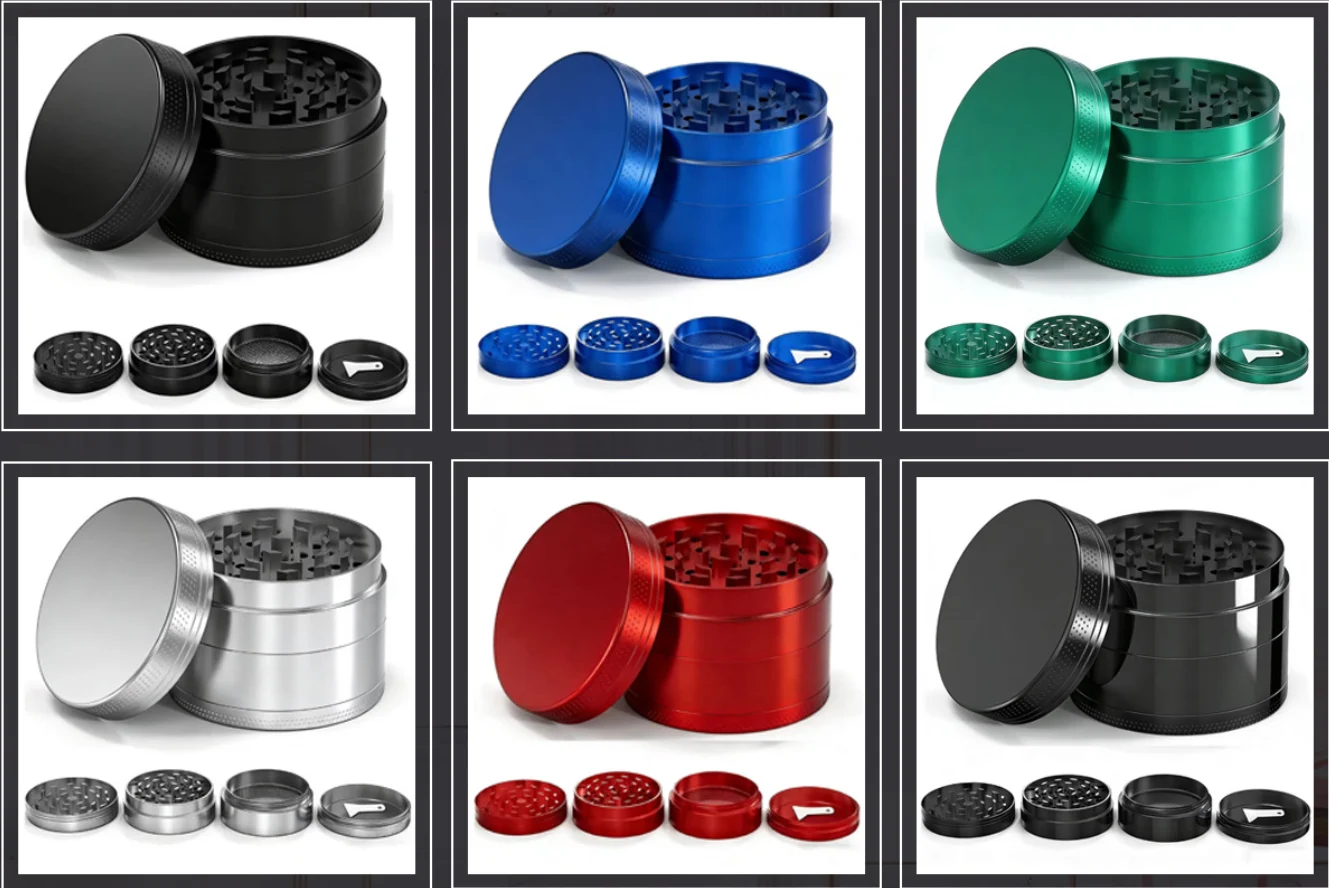
Metal bodies offer a smooth, solid base for strong graphic presentation. The available forms include multi-part cylindrical construction, removable top sections, textured grip areas, and flat circular print zones. These details affect both the artwork size and the fixture needed to keep every piece in the same position.
For a top cover, the artwork is prepared to follow the actual circular print area rather than the outside diameter of the product. A small safe margin helps keep important text and logos away from the rounded edge. For side or cylindrical areas, we check the wrap direction, seam position, rotation, and the relationship between the printed area and the product structure.
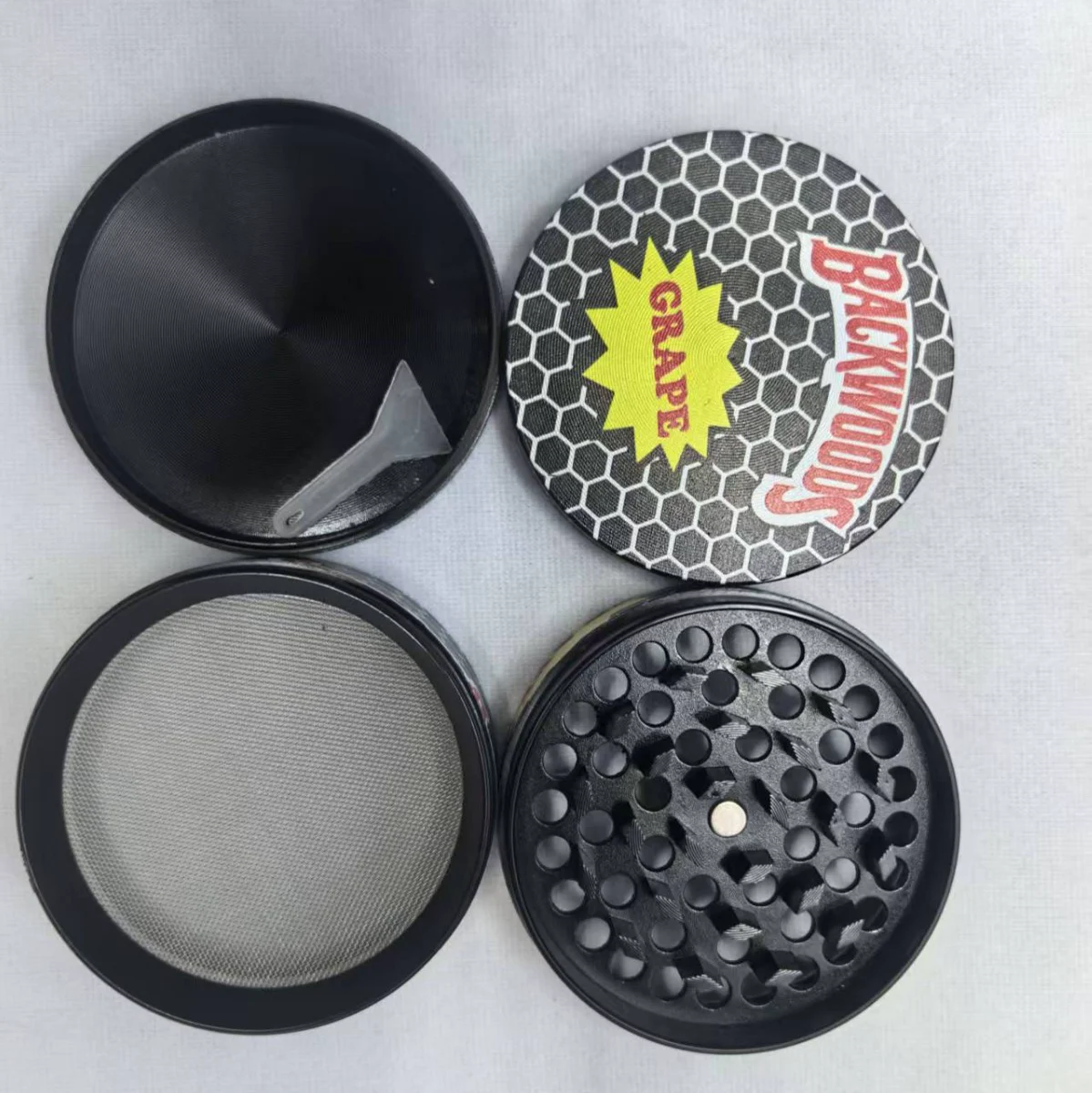
The final color effect depends on the base color, coating, surface sheen, and whether white ink is required below the artwork. Dark or colored bodies may need a white ink layer to keep light artwork clear. Metallic or reflective finishes can be used as part of the visual effect when the buyer wants the base material to remain visible.
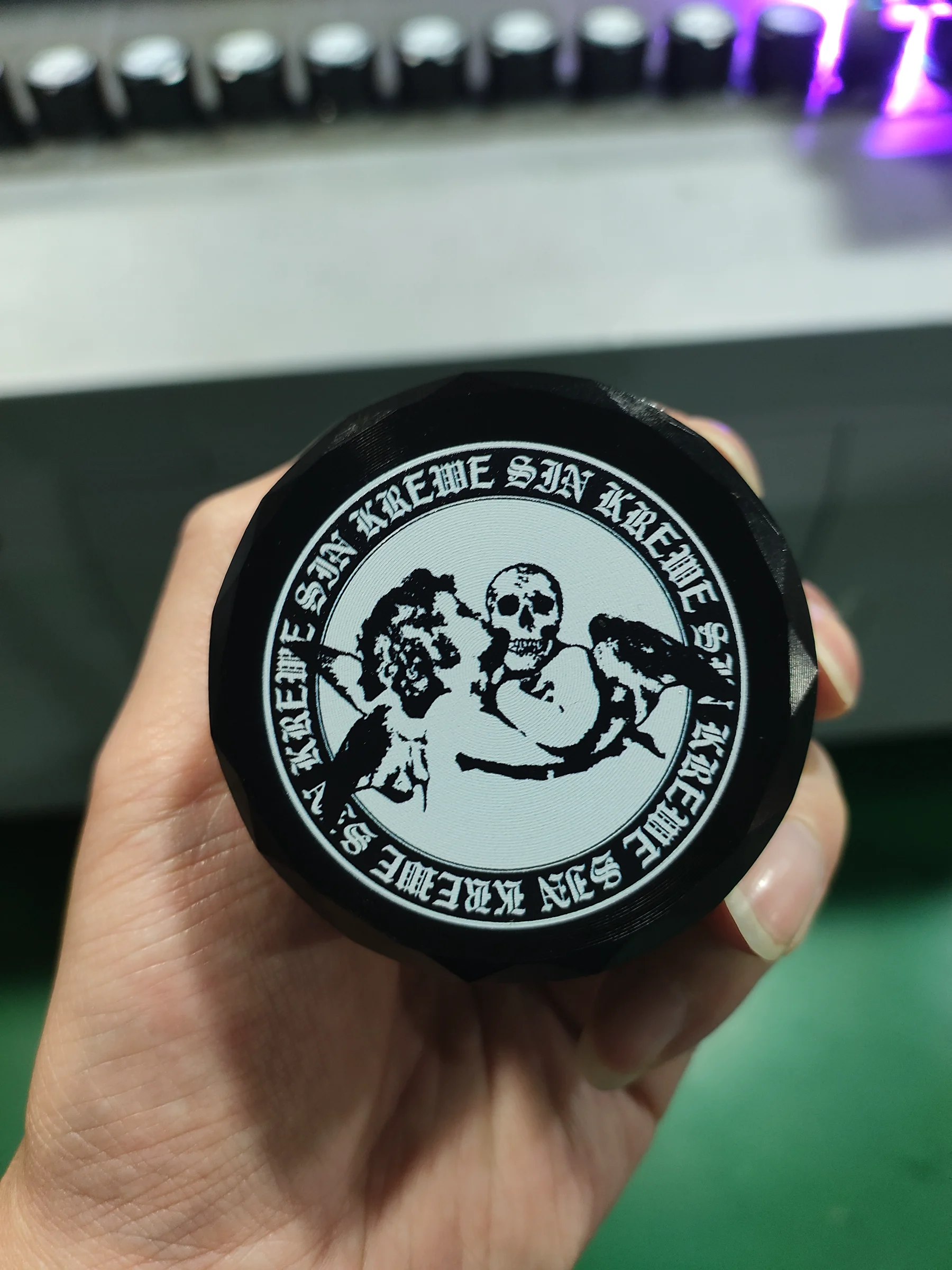
Metal Printing Points We Confirm
- Product diameter, height, component structure, and printable surface.
- Top-cover artwork scale, rotation, safe area, and edge clearance.
- Base color, gloss or matte finish, white ink requirement, and color target.
- Fixture positioning, repeat alignment, adhesion check, and rub resistance.
- Packaging protection for coated surfaces during export shipment.
Glass Accessory Printing: Clear Surfaces and Controlled Color Layers
Clear glass creates a different visual result from metal. Transparency, reflections, curved walls, and viewing angle all influence how the artwork is perceived. The most important decisions are print position, opacity, white ink strategy, and whether the design should appear bright, translucent, or integrated with the glass surface.
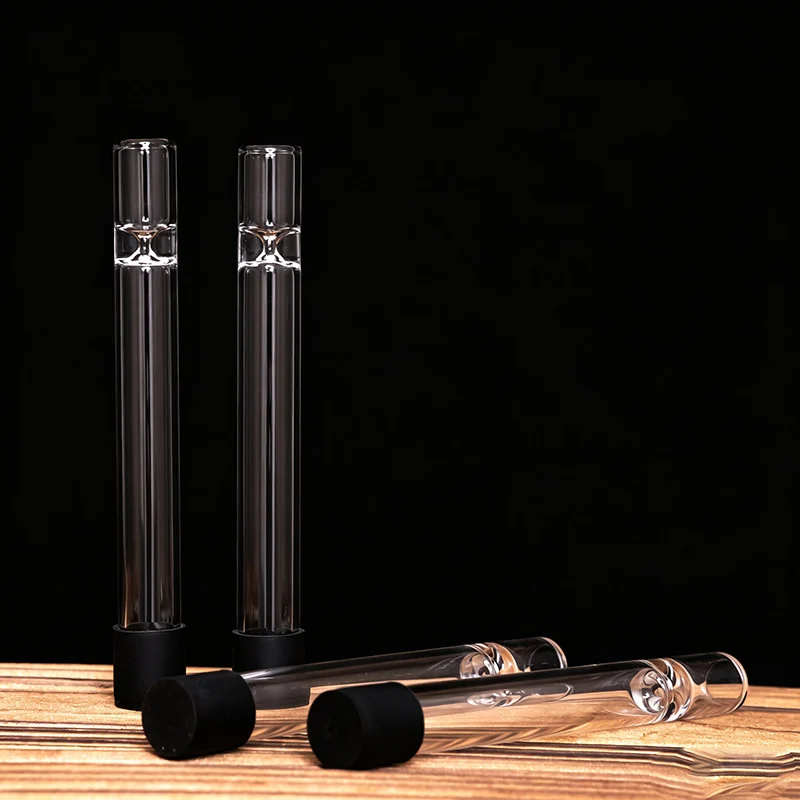
For cylindrical glass forms, the fixture must keep the product stable while the artwork is registered to the correct zone. Simple graphics, high-contrast logos, and controlled line weights generally produce the most consistent result. Fine details should be checked at the actual finished size before mass production.
Glass Printing Points We Confirm
- Glass shape, wall curvature, print zone, and viewing direction.
- Transparent, translucent, or opaque artwork treatment.
- White ink order, color density, and edge definition.
- Surface cleaning, adhesion testing, handling, and packing protection.
Wooden Accessory Printing: Artwork Plus Natural Grain
Wood adds a warmer tactile character, but its grain and tone can influence the printed result. Light artwork may look different on dark wood, while natural grain may remain visible through a translucent color treatment. We confirm the wood tone, surface smoothness, coating, and the intended relationship between the graphic and the material texture.
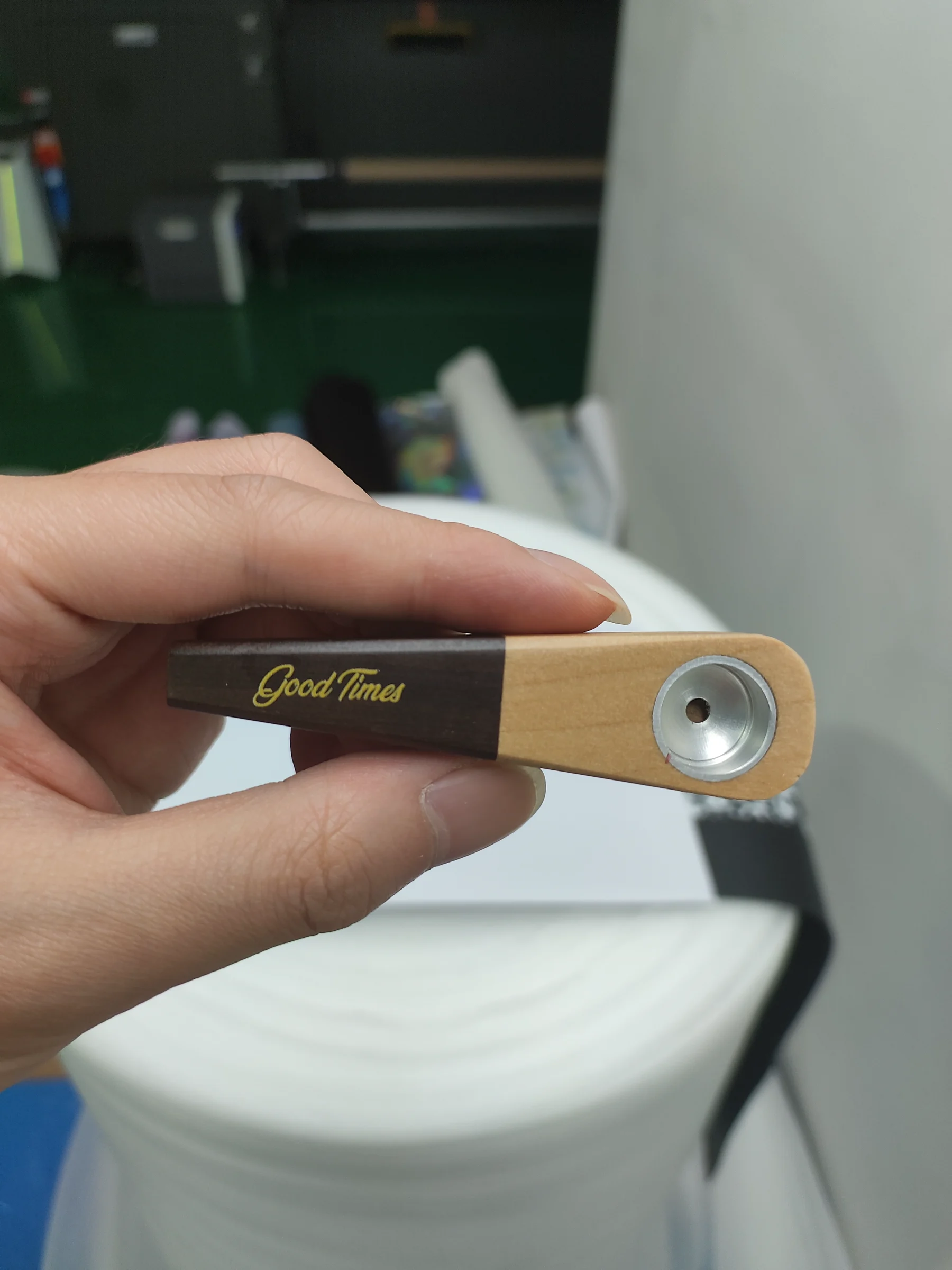
For a repeatable result, the artwork should be prepared with the actual wood color in mind. A proof or physical sample is recommended when the design depends on pale colors, fine text, or exact brand color matching.
Glass Ashtray Surface Printing
Square and rounded glass ashtray forms provide a broad flat area for logos, patterns, and brand graphics. The design should account for the inner rim, border radius, transparent edge, and the direction from which the graphic will normally be viewed. A centered composition with sufficient edge clearance usually gives the cleanest production result.
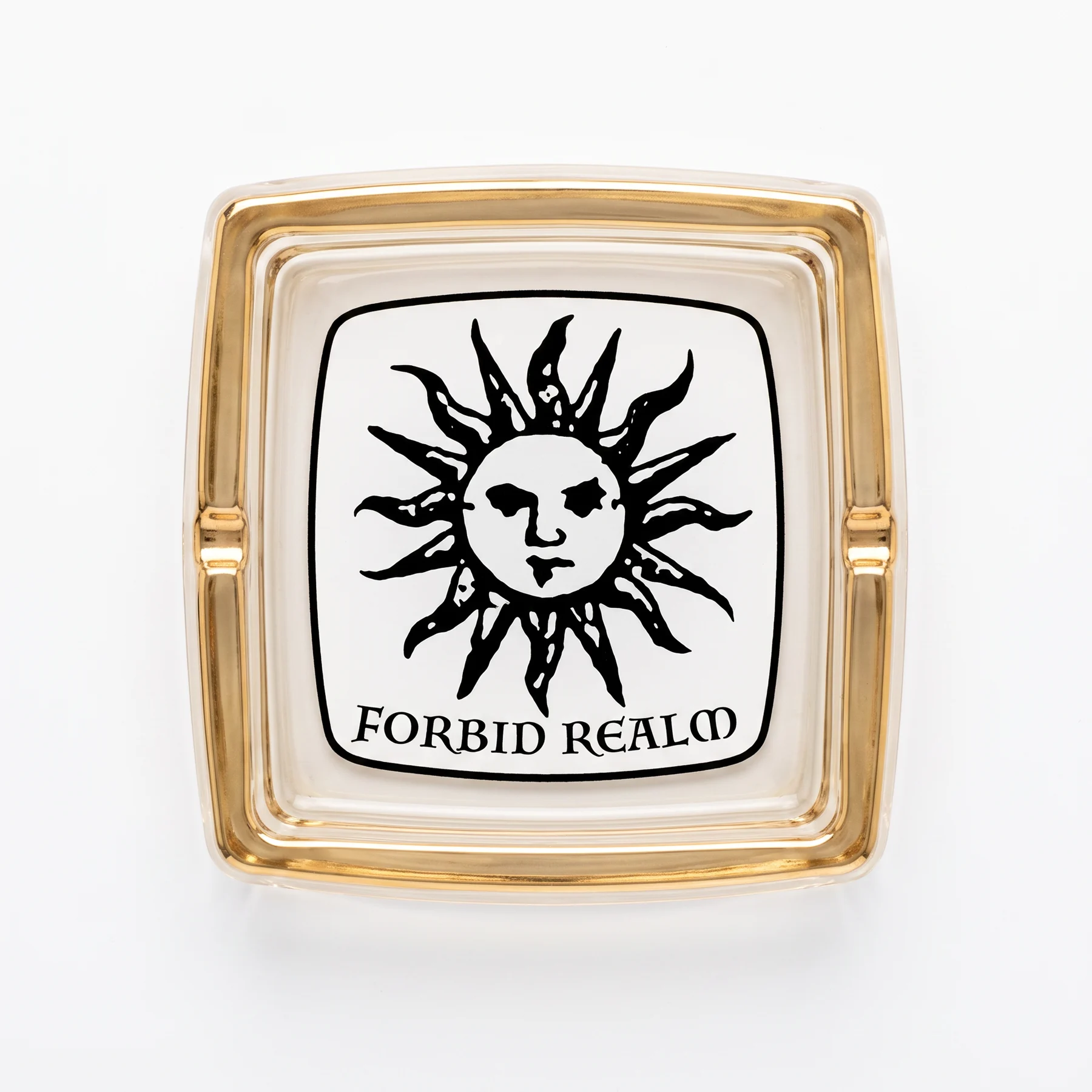
For glass trays, we confirm whether the graphic is intended to be viewed through the glass or directly from the printed face. This determines the print order, white ink use, and artwork orientation. Handling and packaging are also important because glass edges need individual protection.
UV Printing Workflow: From Artwork Review to Export-Ready Production
- Application and product review. Confirm the product form, material, size, print side, quantity, destination, and lawful intended application.
- Artwork preparation. Check file size, orientation, safe area, resolution, color mode, white ink needs, and whether the graphic follows a curved or circular surface.
- Surface and fixture setup. Confirm cleaning, coating condition, jig positioning, rotation direction, and the reference point used for repeat alignment.
- Sample production. Produce a physical sample or small approval run when the material, color, curvature, or artwork detail creates production risk.
- Quality review. Check print position, color consistency, fine detail, adhesion, rub resistance, surface defects, and packaging protection.
- Batch production and shipment. After approval, keep the accepted artwork and production parameters as the reference for the batch, then pack by material and ship according to the approved plan.
Material and Surface Considerations
UV printing is a direct surface-decoration process, so the final result is influenced by more than the digital artwork. Metal coating, glass cleanliness, wood grain, surface sheen, white ink, fixture accuracy, and viewing angle all matter. For this reason, color on screen should be treated as a design reference; the physical sample is the final approval reference for a production order.
For curved products, artwork must be sized to the actual print zone. For clear products, the print order and background layer must be confirmed. For natural wood, grain and tone should be considered part of the finished appearance. These checks reduce rework and make the result easier to repeat across a batch.
Recommended Buyer Applications
- Private-label accessory programs with customer-supplied artwork.
- Brand merchandise, retail collections, and promotional product lines.
- Studio, club, hospitality, and lifestyle branding projects for lawful adult customers.
- Small-batch launches that need a physical sample before larger production.
- Multi-material collections that use one visual identity across metal, glass, and wood.
MOQ, Sampling, and Production Path
MOQ and lead time depend on the product form, material, print coverage, number of artwork designs, packaging, sample requirements, and destination. A practical project path is: send the product direction and artwork, confirm the printable area, review the material and finish, produce a sample when needed, approve the result, and then release the batch for production.
For a quotation, send the product type, size or model, artwork file, print position, color preference, quantity, packaging requirement, destination country, and target delivery date. We can then recommend the most suitable production route and confirm whether the project can proceed after manual review.
Request a Manual Production Review
Send your artwork, product direction, quantity, and destination for a practical review. We can help confirm the printable area, surface treatment, sample path, and production details before payment or mass production.